releases
BitSpeed Inspect Adds POST Requests and Warm Connections
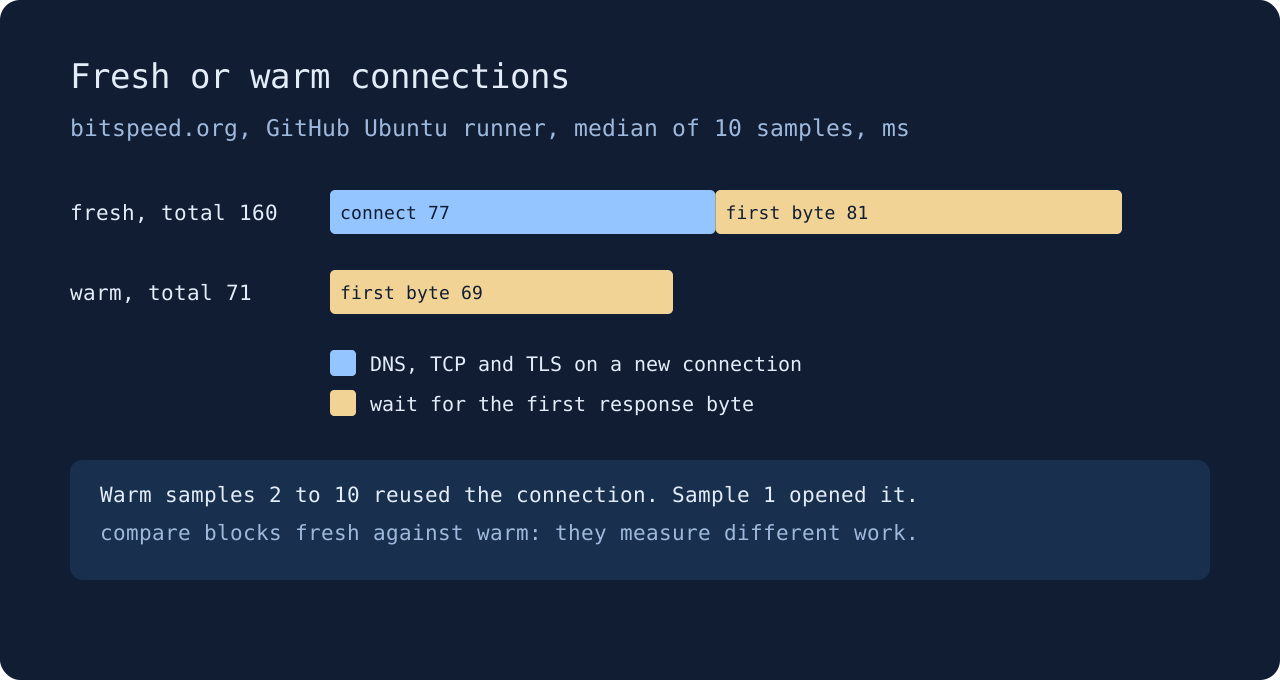
Until now Inspect only sent GET requests, each on a brand new connection. That’s the right default for comparisons, because every sample does the same work. It …
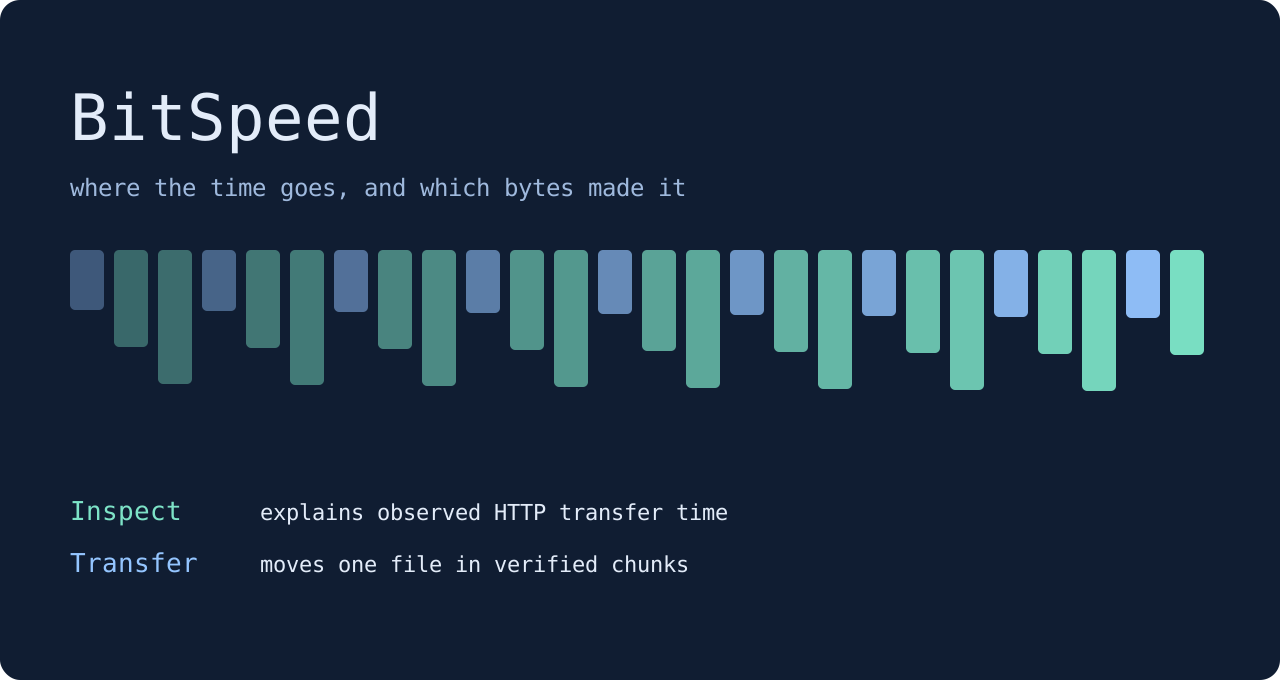
Two independent Go tools. Inspect records HTTP requests, shows which measured interval took the time and compares saved runs. Transfer moves a large file in verified chunks, and after a crash or kill it sends only what the receiver can't prove it already has.
Released
Inspect records, explains and compares HTTP transfers
Released
Transfer moves one file with verified chunks and recovery
JSON
Saved observations and machine-readable reports
Apache 2.0
License for the Go tool code
Independent commands, clear release status and evidence you can inspect. No hosted service is required.
releases
Until now Inspect only sent GET requests, each on a brand new connection. That’s the right default for comparisons, because every sample does the same work. It …
releases
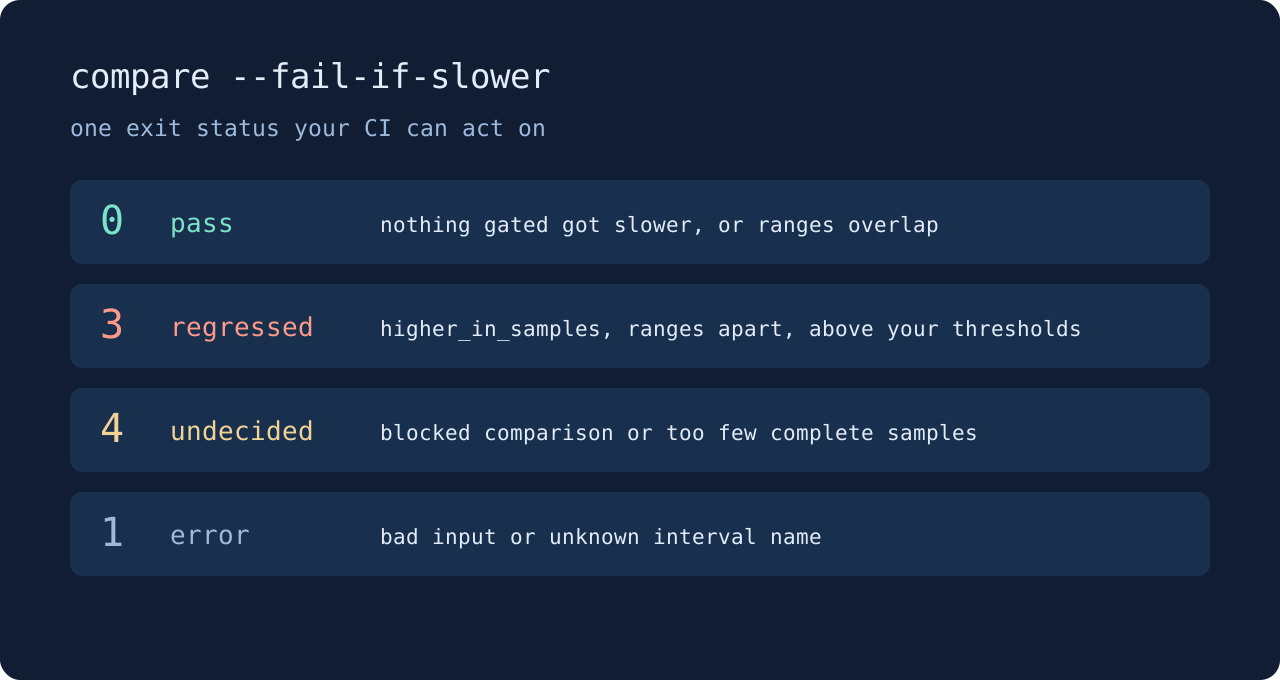
A comparison you read once is useful. A comparison that runs on every pull request and stops the merge when something got slower is more useful. Inspect 0.2.0 adds that: …
case studies
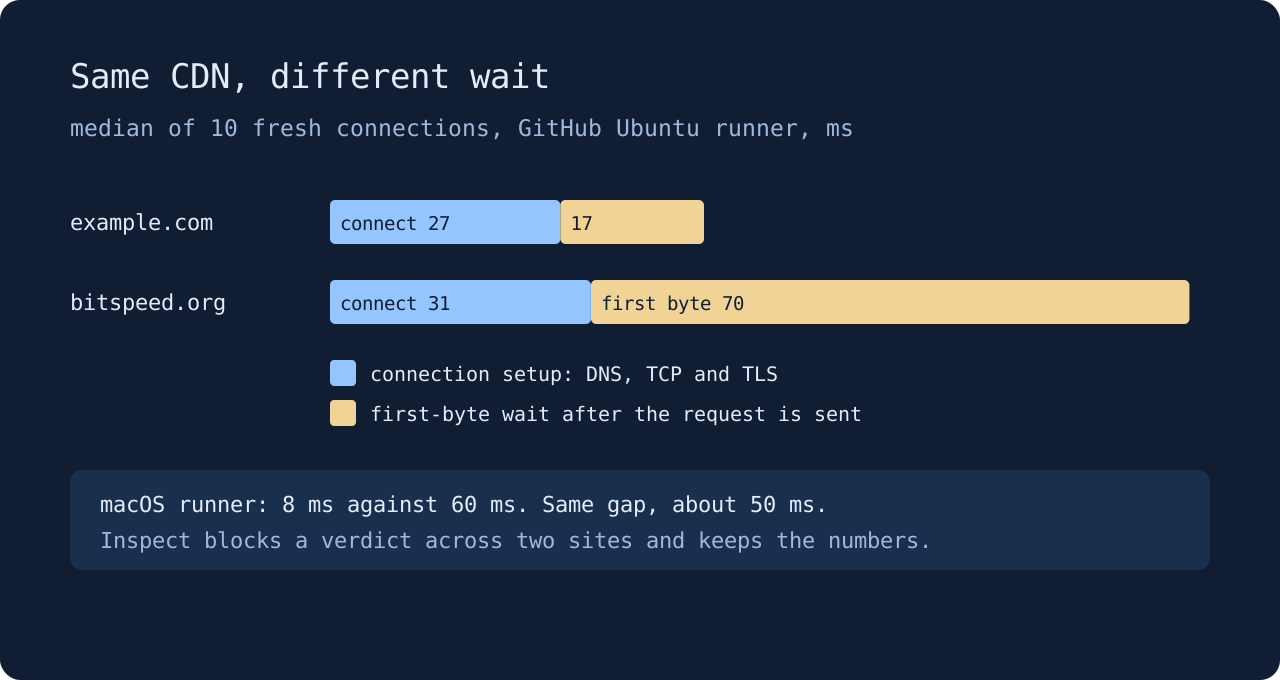
The first Inspect case study used a local test server, which is tidy but a little too easy. So we pointed the released binary at real sites on the public internet, …
releases
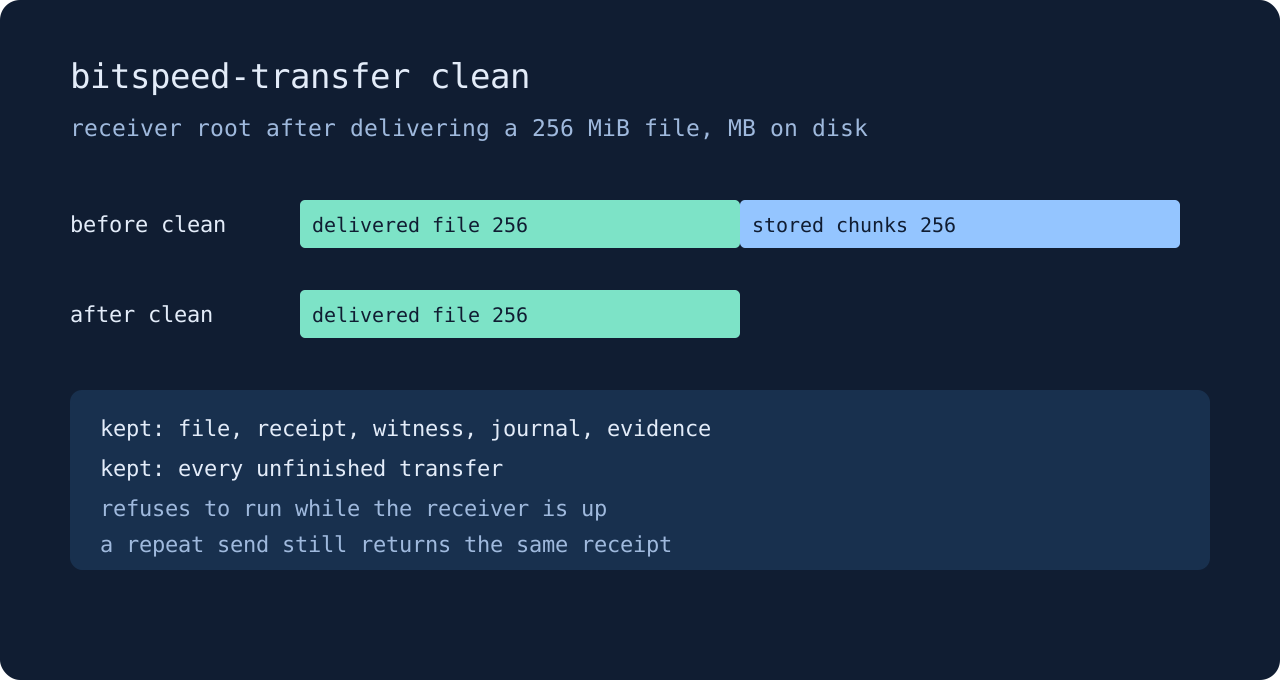
Transfer keeps everything by default. That’s deliberate. Stored chunks are what let a receiver prove its progress after a crash. Once a file is delivered, though, …
releases
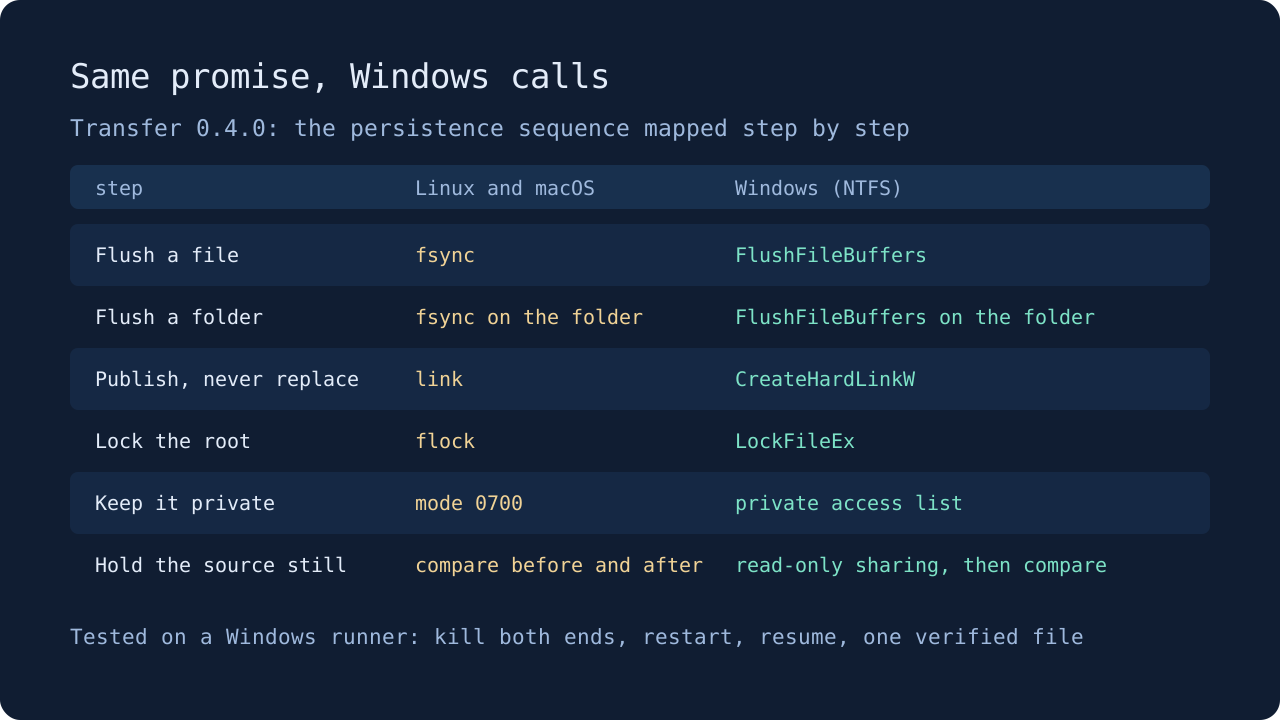
Until now the Windows archive of Transfer could print its version and politely refuse everything else. Transfer 0.4.0 changes that. Prepare, send, status, serve and clean …
releases
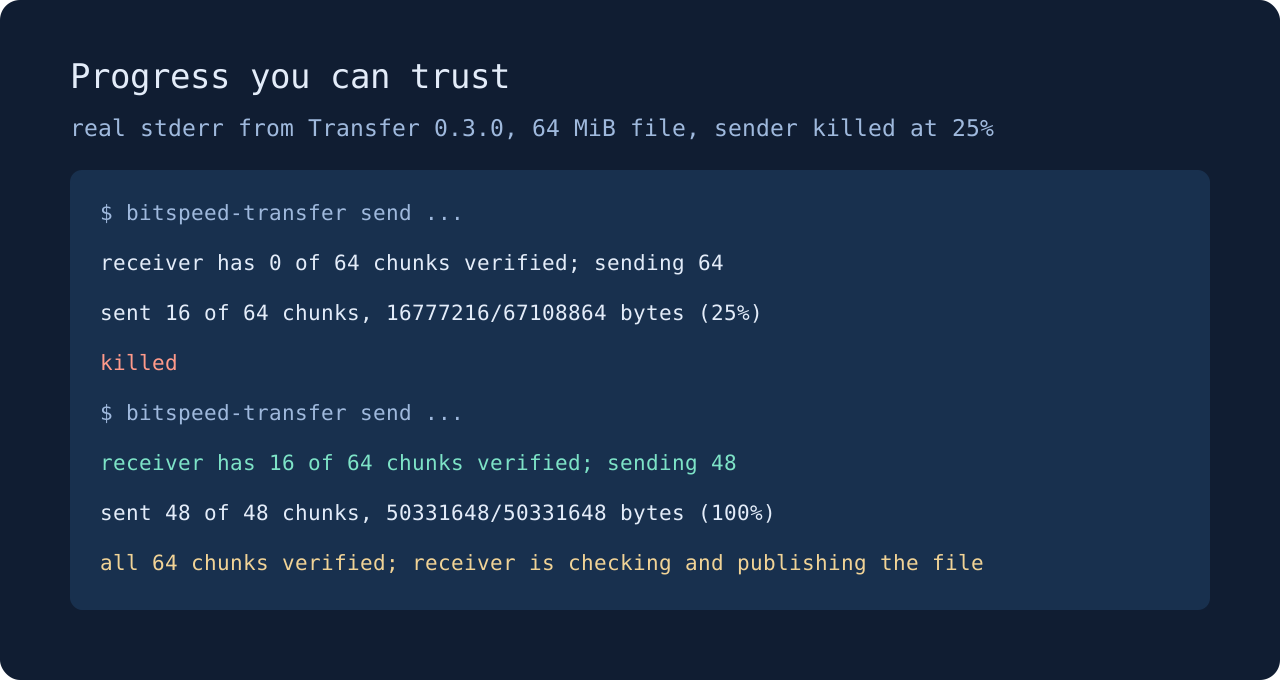
Until now, bitspeed-transfer send was quiet until it finished. On a big file over a slow link that’s a long time to stare at a cursor. Transfer 0.3.0 prints …
case studies
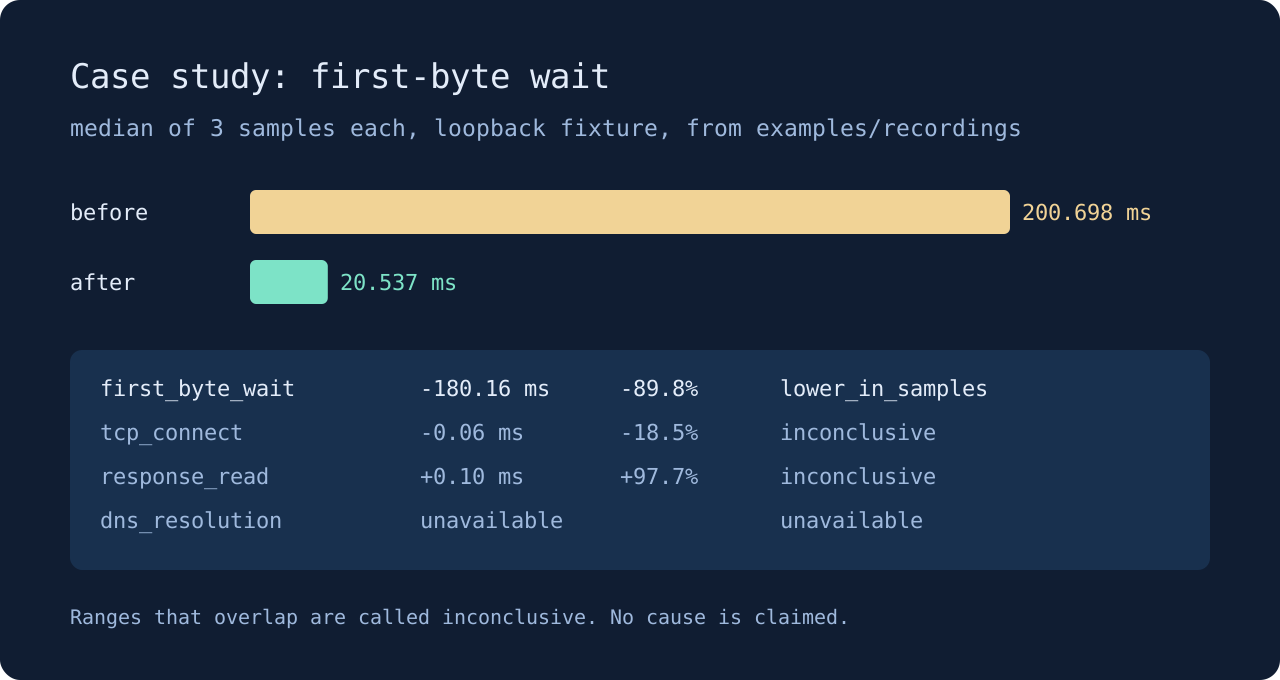
Here’s the situation. A request feels slow. Someone changes something, and it feels faster. Was it the connection, the server’s first response, or reading the …
releases
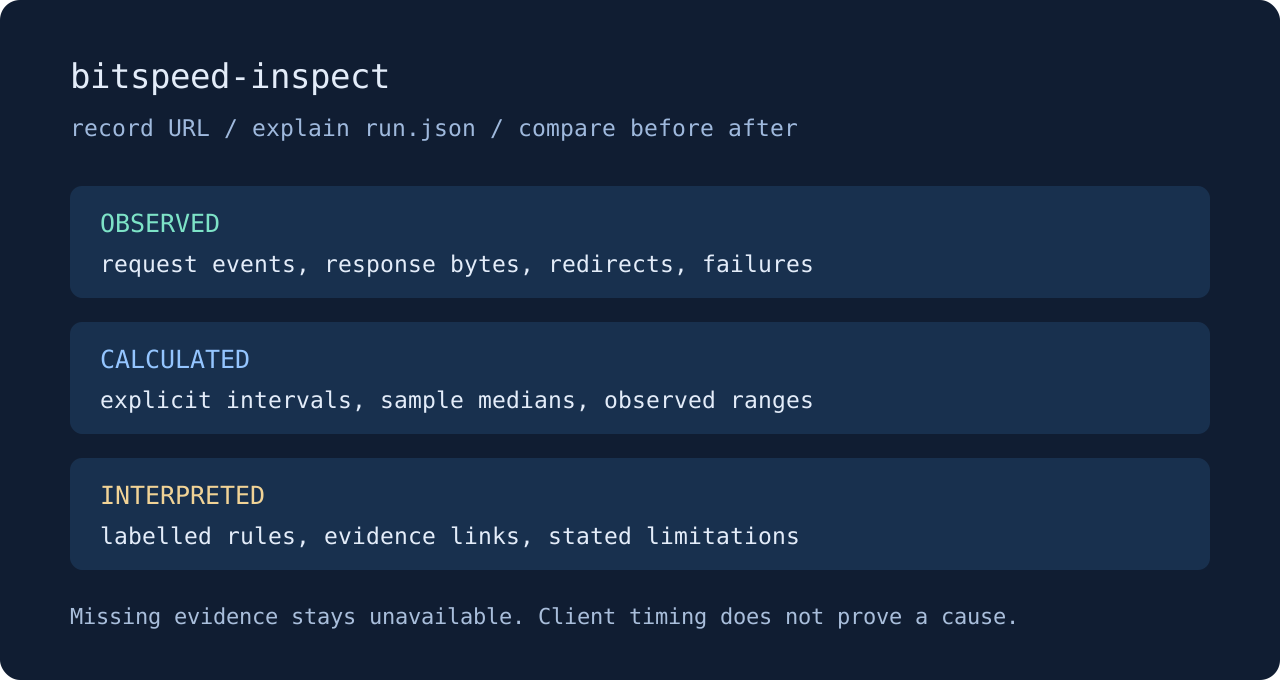
A slow request gives you a duration. The next question is where that duration came from, and whether the same interval changed after you adjusted something. BitSpeed …
comparisons
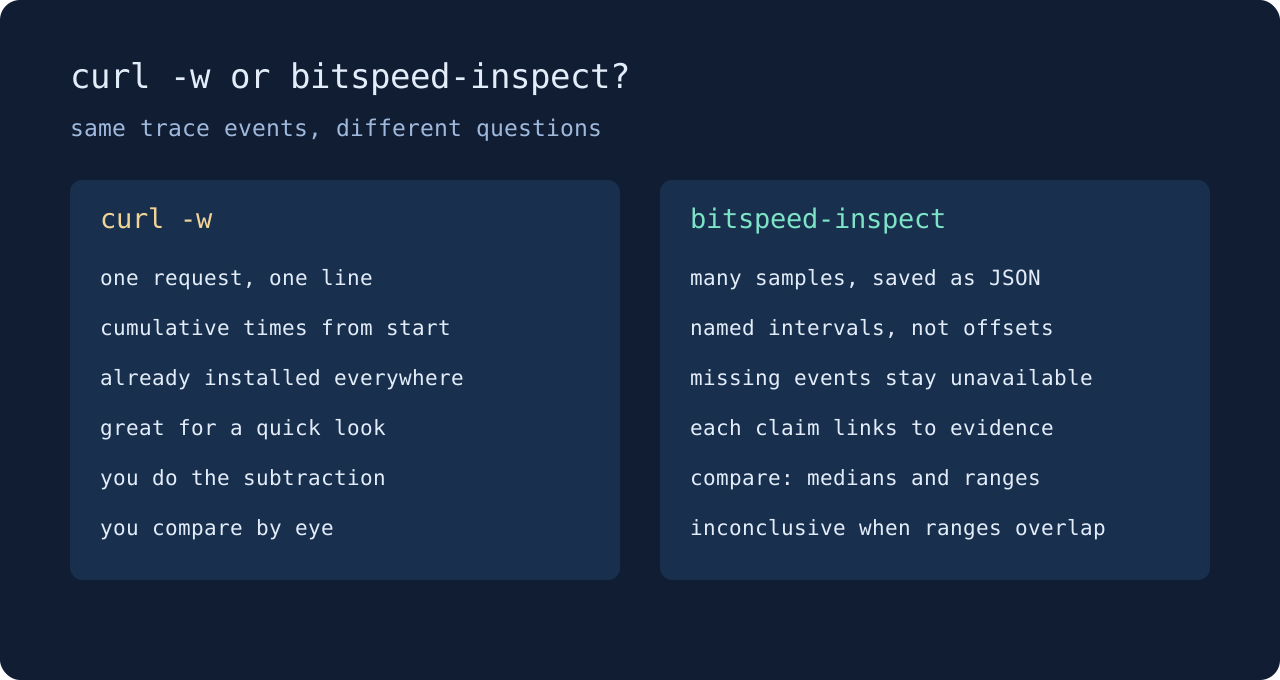
If you’ve ever debugged a slow endpoint, you’ve probably typed something like this: curl -o /dev/null -s -w 'dns %{time_namelookup} connect …
Tell us what you tried and what the saved evidence shows. Review recordings for private details before sharing them.